When to Track Transits vs Secondary Progressions
Understanding when to focus on transits versus secondary progressions can transform how you interpret astrological timing and personal growth cycles.
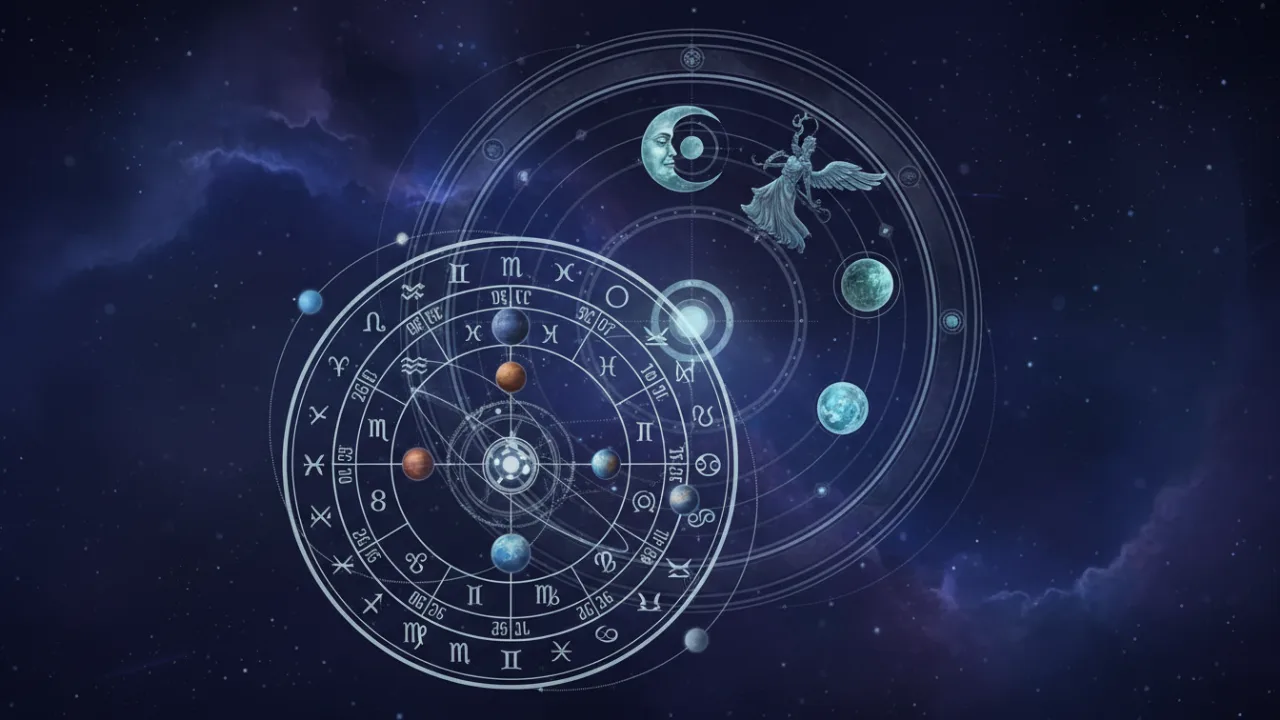
Key takeaways
- Transits reflect current planetary movements affecting your natal chart
- Secondary progressions show internal development and life chapter timing
- Use transits for short-term events and progressions for long-term themes
- Combine both methods for most accurate astrological interpretation
Understanding the Basic Differences
Transits represent the actual, current positions of planets in the sky as they move across your natal chart. These are the day-to-day planetary movements that create temporary influences and trigger events in your life. When Mars transits your 10th house, for instance, you might experience career-related action or conflict.
Secondary progressions, meanwhile, use a symbolic system where one day after birth equals one year of life. This method reveals your internal development process and the timing of life chapters rather than external events. Progressed planets moving into new signs or forming aspects indicate evolutionary shifts in your consciousness and life direction.
When to Focus on Transits
Transits are most valuable for understanding short-term influences and specific timing of events. Use them when you want to know about current opportunities, challenges, or triggers in your life. The movement of like Mercury, Venus, and Mars through your houses indicates weekly or monthly themes.
Slower transits from Jupiter, Saturn, Uranus, Neptune, and Pluto indicate longer cycles but still represent external conditions and events. Saturn transiting your 7th house might bring relationship tests or commitments, while Jupiter transiting your 2nd house could expand your resources. These transits typically last several months to a few years.
- Step 1Identify current planetary positionsCalculate where transiting planets fall in your natal chart houses and what aspects they make to your natal planets
- Step 2Note the speed of transiting planetsFast planets (Moon, Mercury, Venus, Mars) indicate short-term influences; slow planets show longer cycles
- Step 3Track exact aspect timingNote when transiting planets form exact conjunctions, squares, trines, or oppositions to natal points
- Step 4Observe house activationNotice which houses are being activated by current transits and what areas of life are highlighted
When to Use Secondary Progressions
Secondary progressions excel at revealing your soul's evolutionary journey and the timing of internal development. Use them when you want to understand your personal growth phases, changing priorities, or why certain life chapters begin and end when they do. A progressed Moon changing signs every 2-3 years indicates shifting emotional needs and life focus.
Major progression milestones include the progressed Sun changing signs (approximately every 30 years), progressed Moon returns (every 27-28 years), and significant planetary aspects in the progressed chart. These markers often correlate with life stage transitions rather than specific events. For deeper insight into symbolic timing, explore how can complement progression analysis.
Combining Both Methods for Accuracy
The most effective astrological practice integrates both transits and progressions. Progressions often set the stage for developmental themes, while transits trigger the actual events that manifest these themes. A progressed Venus changing signs might indicate a shift in relationship values, but a Jupiter transit to your 7th house could trigger the actual partnership opportunity.
Notice when progression themes align with transit activations—these periods often bring significant life developments. For example, if your progressed Sun is entering a new house while transiting Saturn aspects your natal Midheaven, you might experience both internal identity shifts and external career changes simultaneously. Regular reading of can help you track these overlapping cycles.
Transits show the weather of your life while progressions reveal the changing seasons of your soul.
Common Timing Mistakes to Avoid
One frequent error is giving equal weight to all transits and progressions without considering their relative speed and duration. A progressed planet changing signs has far more lasting significance than a fast-moving transit, though the transit might get more immediate attention. Another mistake is overlooking the that can enhance both transit and progression interpretation.
Frequently asked questions
Can transits and progressions contradict each other?
Yes, sometimes progressions indicate internal readiness for change while transits show external delays, or vice versa. These apparent contradictions often reflect the complex timing of when we're internally prepared for something versus when external conditions allow it.
How far in advance should I track transits versus progressions?
Transits are most accurate within 1-2 months for personal planning. Progressions can be tracked years in advance since they change slowly, giving you insight into upcoming developmental phases.
Which method is better for predicting relationships?
Use progressions for understanding your evolving relationship needs and patterns (progressed Venus/Moon), and transits for timing meetings or significant relationship events (transits to 7th house, Venus, or Mars).
Do I need different software for transits vs progressions?
Most astrology software calculates both, but ensure you understand the different calculation methods—transits use current planetary positions while progressions use the symbolic day-for-year system.
Read also: Planets Are People - Lessons to be learned from the people in your lif, Astro Logic Insights Monthly Vol. 5 No.2 This, That and Declinations,b, Free and Paid Classifieds from AdlandPro for worldwide coverage.